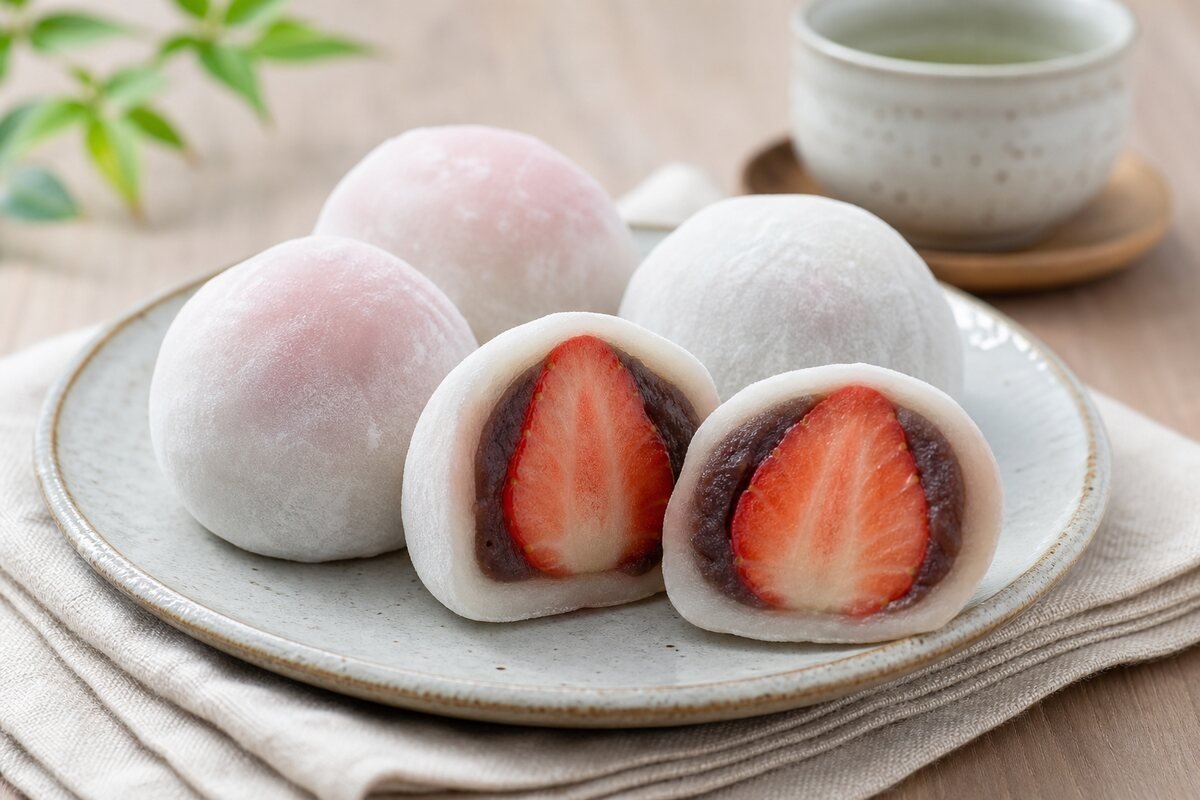
Ingredients
Equipment
Method
Prepare the strawberry filling:
- Divide the red bean paste into eight equal portions. Flatten each portion into a disk.
- Place a dry strawberry in the center of each disk and wrap the bean paste around it, leaving the pointed tip visible. Chill while making the mochi.
Cook the mochi:
- Whisk the glutinous rice flour, sugar, and water in a microwave-safe bowl until smooth. Cover loosely with plastic wrap.
- Microwave for 1 minute, stir thoroughly with a wet spatula, then microwave for another minute. Stir again and microwave for 30 to 60 seconds, until translucent and sticky.
- Dust a board generously with potato starch and scrape the hot mochi onto it. Dust the top and let it cool for 5 minutes.
Shape the daifuku:
- Divide the mochi into eight equal pieces. Flatten one piece into a round, keeping the center slightly thicker than the edges.
- Place a strawberry bundle tip-side down in the center. Gather the mochi around it and pinch firmly to seal.
- Turn seam-side down, brush away excess starch, and repeat with the remaining pieces. Serve the same day.
Nutrition
Notes
- Dry the strawberries thoroughly so moisture does not weaken the seal.
- Use glutinous rice flour, not regular rice flour.
- Daifuku is softest on the day it is made.