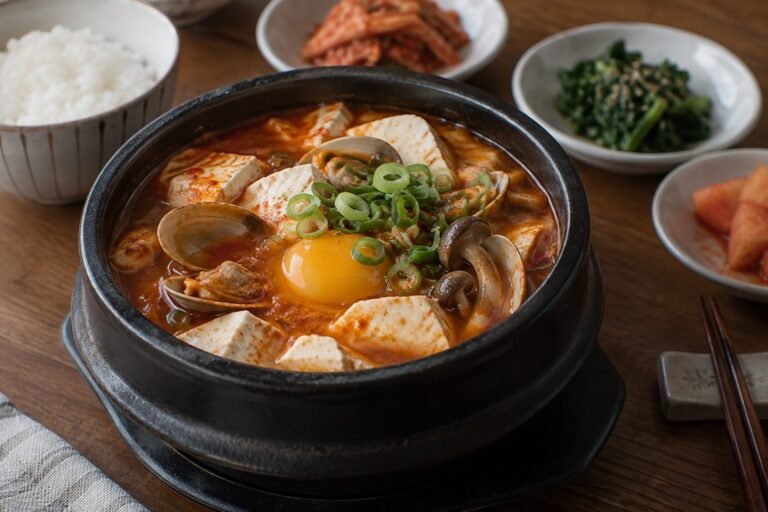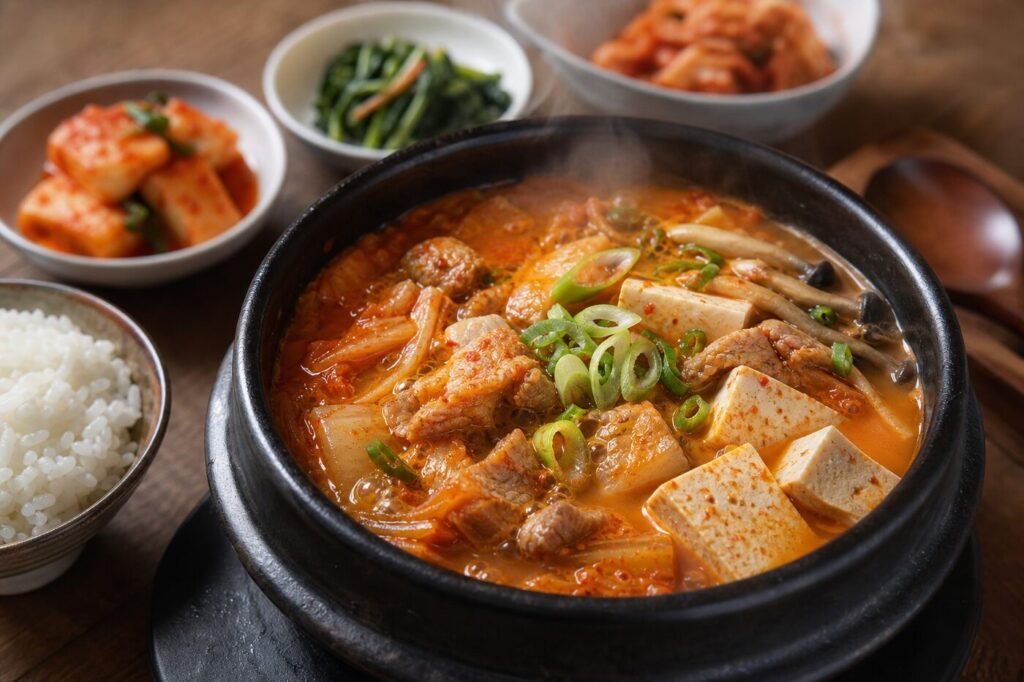
Kimchi jjigae is a beloved Korean home-style stew, prized for its spicy, tangy broth, tender tofu, pork, and the deep flavor of well-fermented kimchi.
Sauté the kimchi and pork first to build flavor, then simmer with stock until the broth turns rich and rounded. Add tofu near the end so it stays in clean, tender pieces.
Older, more sour kimchi makes the most flavorful jjigae. If your kimchi is mild, add a teaspoon of kimchi brine or rice vinegar to sharpen the broth.
Serving Suggestions
Serve bubbling hot with steamed rice, scallions, toasted sesame seeds, and simple banchan such as seasoned spinach or cucumber.
Recipe Notes
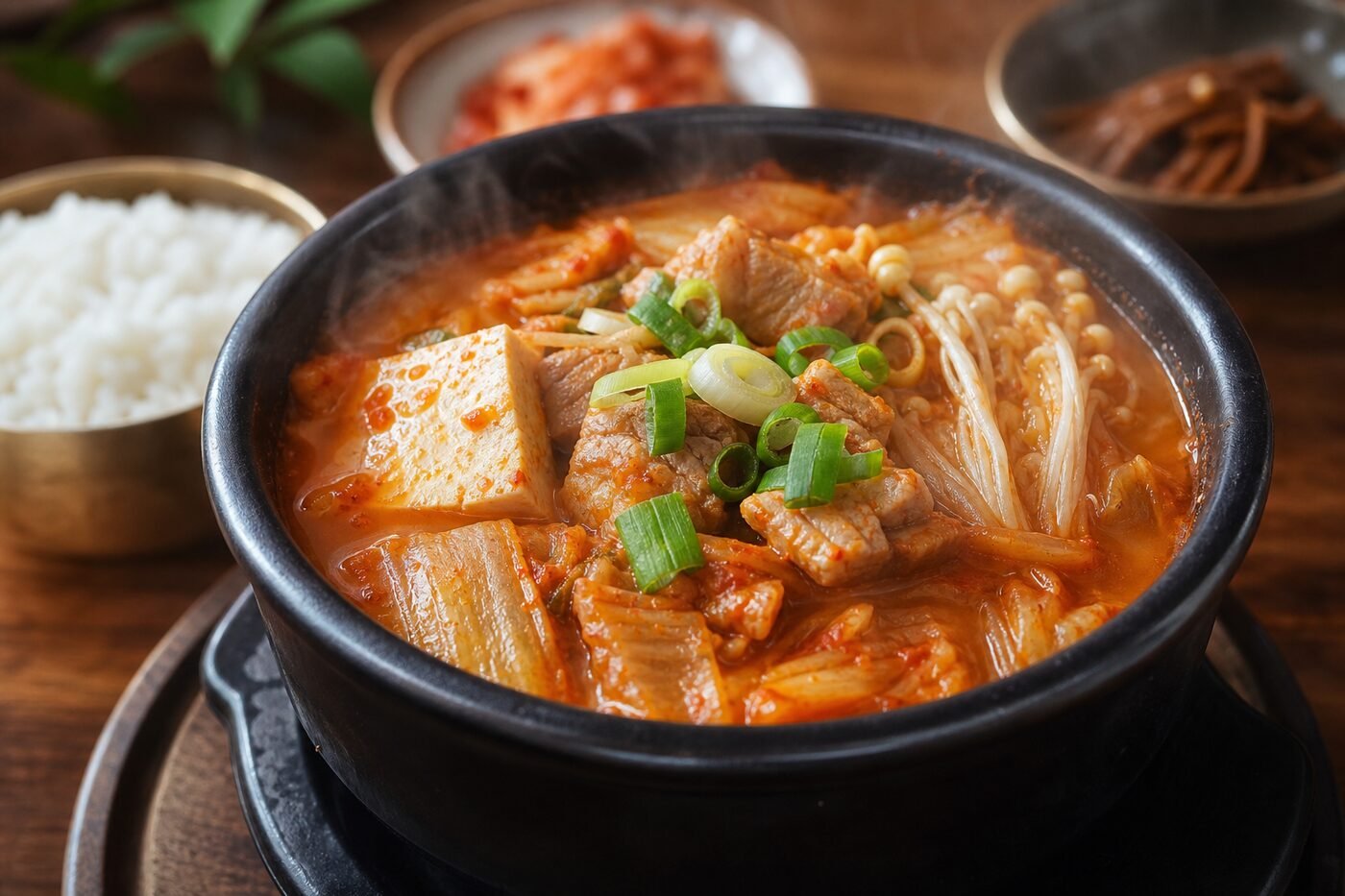
Store leftovers for up to three days and reheat gently. The flavor often improves overnight, though the tofu will soften further.
Korean Kimchi Jjigae
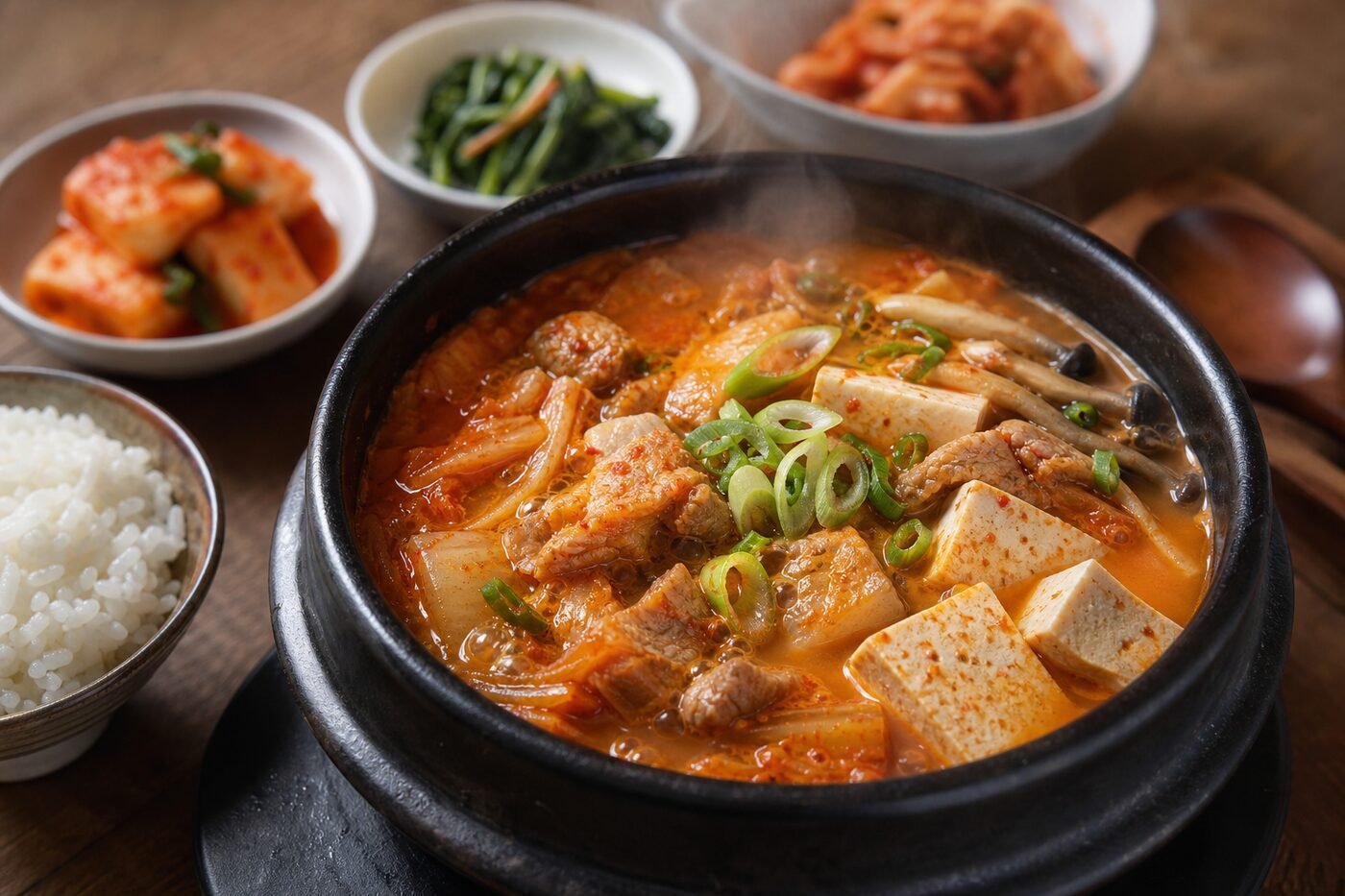
A spicy, tangy Korean kimchi stew with pork, tofu, mushrooms, and scallions.
Ingredients
Equipment
Method
Build the Base:
- Heat the sesame oil in a pot over medium heat. Add the pork and cook for 3 to 4 minutes until lightly browned.
- Add the kimchi, gochugaru, gochujang, and garlic. Stir-fry for 3 minutes until fragrant.
Simmer:
- Add the stock, soy sauce, and mushrooms. Bring to a boil, then reduce the heat and simmer for 25 minutes.
- Taste and adjust with a little kimchi brine, soy sauce, or water as needed.
Finish:
- Nestle the tofu into the stew and simmer for 5 minutes, spooning broth over the top.
- Garnish with scallions and sesame seeds. Serve immediately with steamed rice.
Nutrition
Notes
- Use vegan kimchi and vegetable stock for a plant-based version, replacing pork with extra mushrooms or tofu.
- A stone pot keeps the stew hot at the table but a Dutch oven works perfectly.