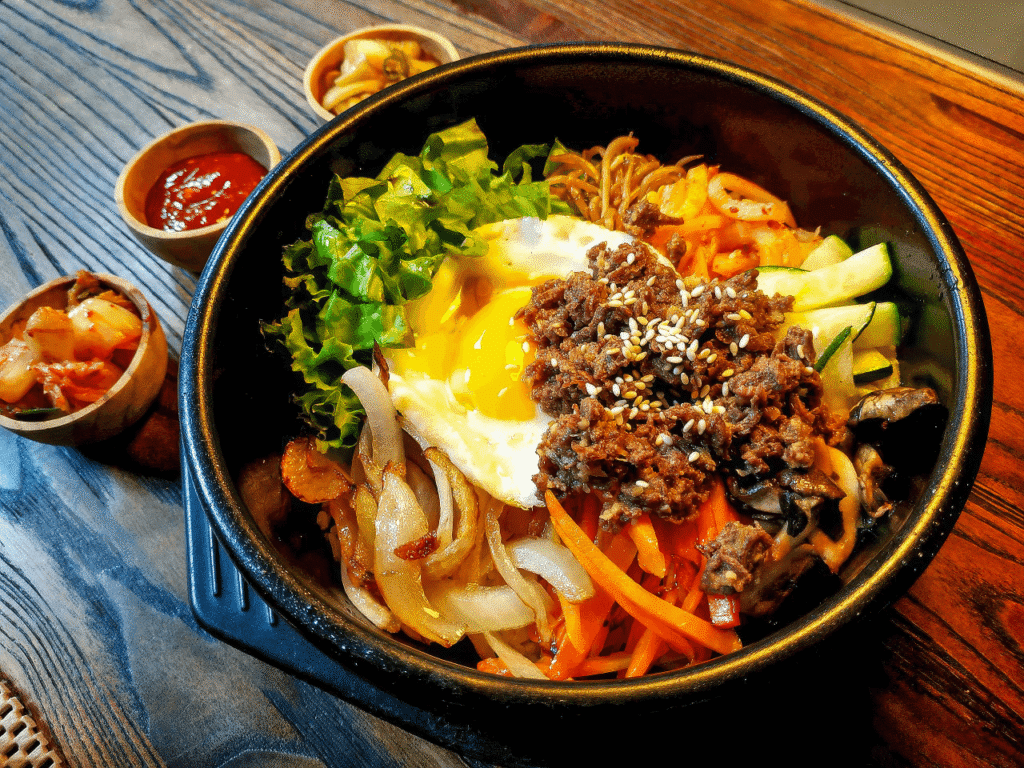
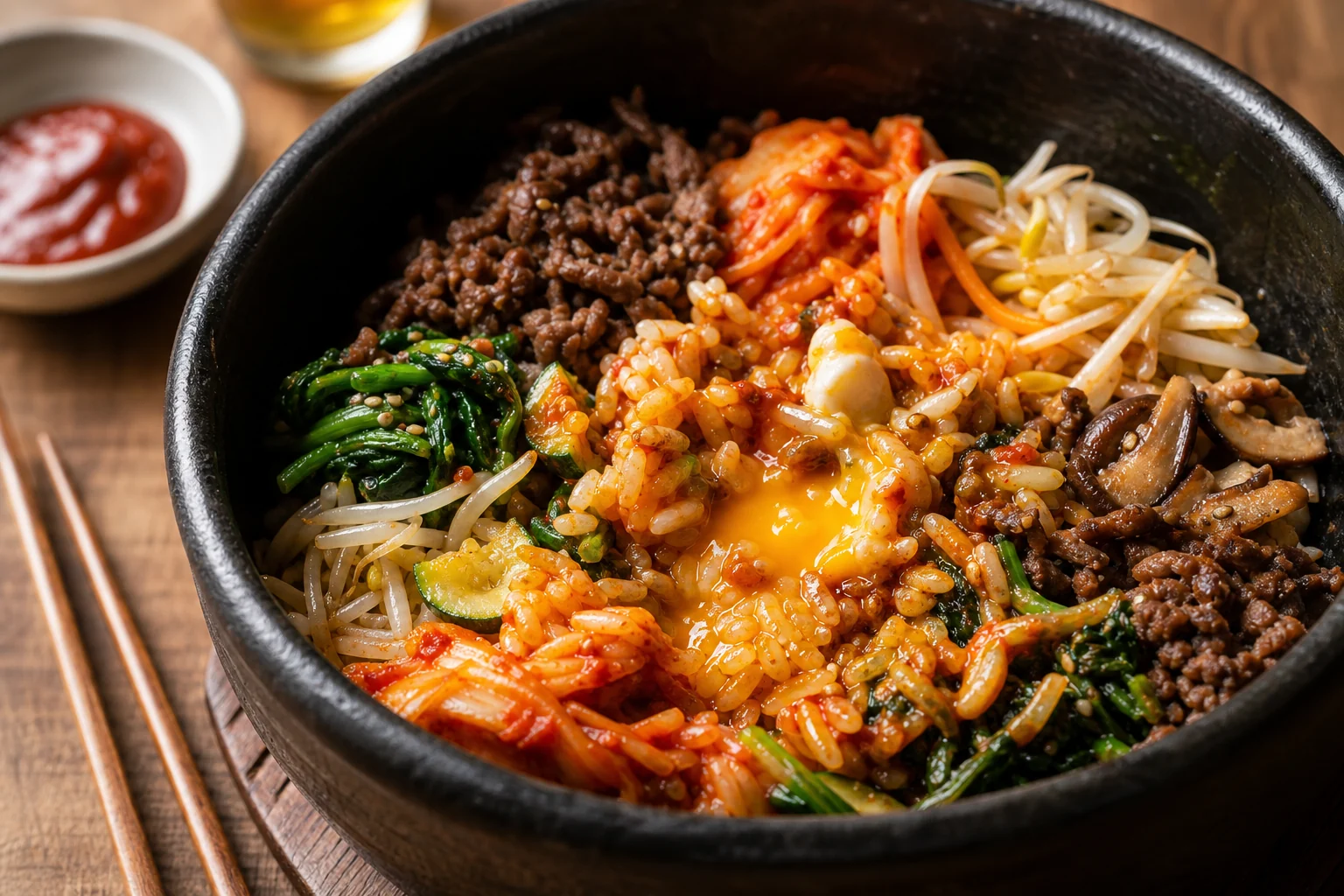
Korean bibimbap is a colorful rice bowl topped with seasoned vegetables, savory beef, kimchi, gochujang, and a fried egg.
This version keeps each topping simple and flavorful, then brings everything together with a quick gochujang sauce and a drizzle of sesame oil.
Prepare the toppings before frying the eggs. Bibimbap is best when the rice is hot, the vegetables are ready, and the egg can go straight on top.
Serving Suggestions
Serve bibimbap with extra gochujang sauce, toasted sesame seeds, sliced scallions, cucumber salad, or a small bowl of miso soup. Mix the bowl at the table so the sauce coats the rice and toppings.
Recipe Notes
Use short-grain rice if possible because it holds the toppings well. Leftover toppings can be refrigerated separately and reheated for quick bowls the next day.
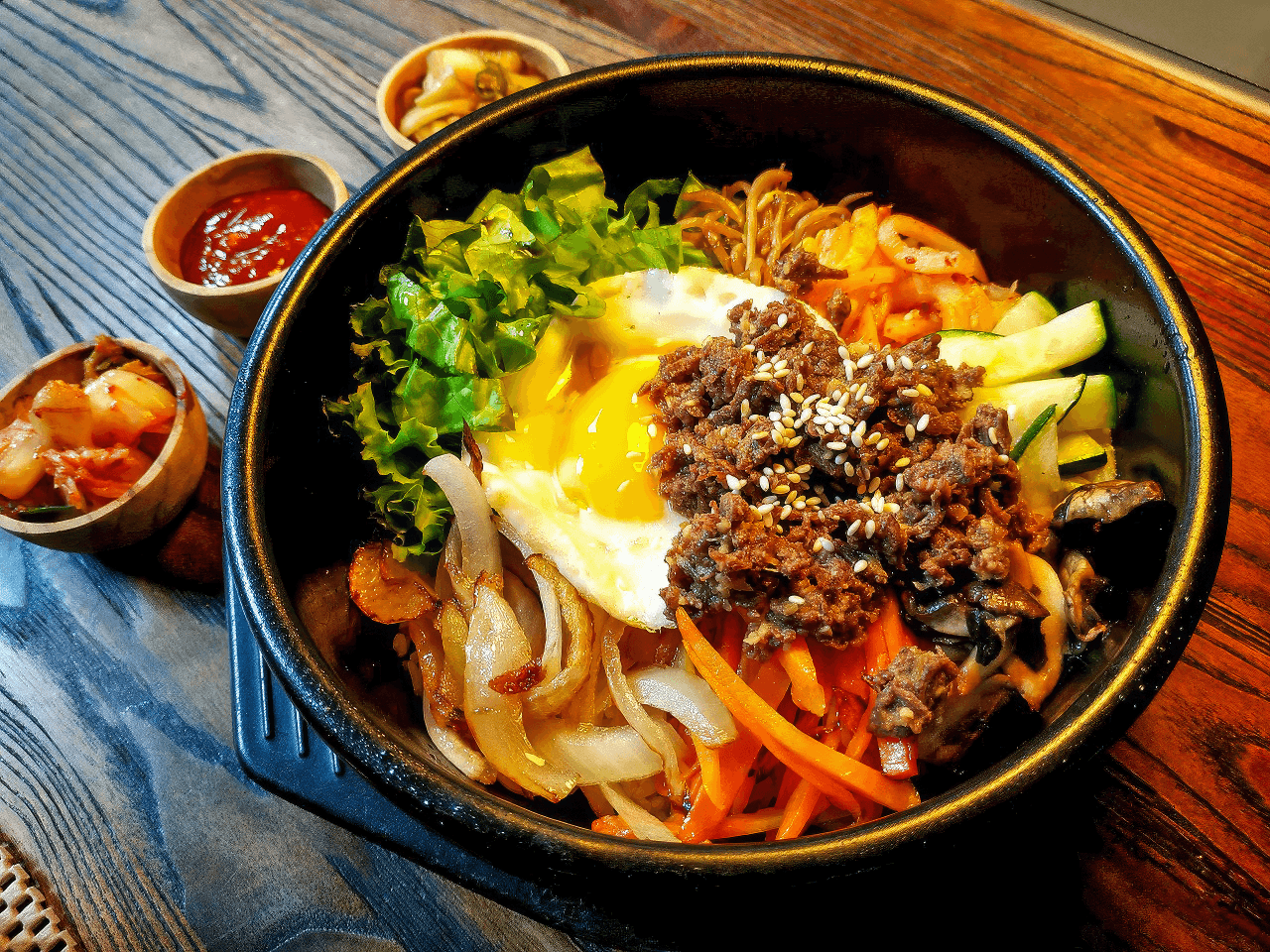
Korean Bibimbap
Ingredients
Equipment
Method
- Stir the gochujang, rice vinegar, sesame oil, honey, and water together in a small bowl until smooth.
- Toss the sliced beef with the soy sauce, brown sugar, 1 teaspoon sesame oil, and minced garlic.
- Heat a large skillet over medium-high heat and cook the beef for 3 to 4 minutes, until browned and just cooked through.
- Transfer the beef to a plate and keep warm.
- Add a little neutral oil to the skillet and quickly saute the carrots with a pinch of salt until just tender, then transfer to a plate.
- Repeat with the zucchini and mushrooms, cooking each topping separately so the vegetables keep their color and texture.
- Wilt the spinach in the same skillet, then season it with the remaining 1 teaspoon sesame oil.
- Blanch or saute the bean sprouts for 2 minutes, then season lightly with salt.
- Divide the hot rice among four bowls.
- Arrange the beef, spinach, bean sprouts, carrots, zucchini, mushrooms, and kimchi in separate sections over the rice.
- Fry the eggs sunny-side up in a nonstick skillet.
- Place one egg in the center of each bowl, spoon gochujang sauce over the top, and sprinkle with sesame seeds.
- Serve immediately and mix well before eating.
Nutrition
Notes
- Cook each vegetable separately for the prettiest bowl and best texture.
- For a vegetarian version, skip the beef and add extra mushrooms or crisp tofu.
- Adjust the gochujang sauce with more water for a thinner drizzle or more honey for a slightly sweeter sauce.